I’ll just say at the onset what I was thinking as I was watching this movie. I thought, and then said it aloud to my partner, who was sitting next to me in the theatre, “Would you have thought we would be seeing movies like this being made in India, during our lifetime?” He shook his head in the negative.
Badhai Do speaks of a marriage of convenience between a gay man and a lesbian woman. The movie is set in small town India, and the main protagonists hail from middle-class, upper caste families. Much like in the depiction of Shubh Mangal Zyada Savdhan. I loved SMZS – because it dealt with the story of two gay men in love, with a fervour and a zeal that made it over the top – like most pioneering statements with a hope for a better future. Badhai Do comes as a strategic step ahead.
It is nuanced and delves within character. There is not much of a back story of the two main protagonists. There is no explanation as to the whys or to the wheretofores of character buildup. They just are and the movie deals with a look into the future prospects of the characters of a certain age. The time when marriage pressure in India comes to a head. That in itself sets the score for the movie. It already comes from a space that looks ahead instead of looking behind.
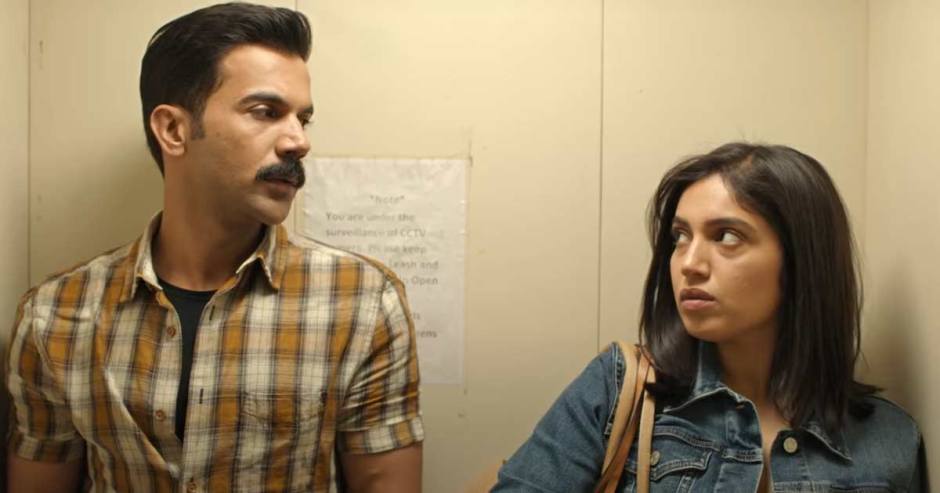
Raj Kumar Rao and Bhumi Pednekar have done spectacular work in crafting the characters of Shardul Thakur and Sumi Singh.
Raj Kumar essentially brings in the angst of being a homosexual man in a “tough man job” and is in love with an MBA student. The fight portrayed between Shardul and Kabir in a motel room made me rethink about my own past. It may not have happened exactly in the same context, but the feelings of insecurity and need were bang on. In this relationship, ageism – that is such a deep-seeded fear in the homosexual community – also becomes the underlying issue – as Shardul mentions. It is almost karmic. It is so quietly mentioned that only those who have felt it will feel it. It’s the slightest touch of feeling – that leaves such a tremendous impact.
Bhumi’s depiction of a woman caught in a job that most in india would say is unsuitable for a woman talks about misogyny just as much as homophobia. Her sense stands head to head with Raj Kumar’s sensibility.
And then there is the question of living up to family expectations that don’t just end with marriage; but post the milestone of marriage there is the pressure build-up of having children. Something we as Indians, living in the second most populated country of the world, should have taken into hand – but no. It doesn’t just end with marriage, yo! Then there is the take on how women have to face the brunt of not getting pregnant. The whole family must consult a fertility specialist on her account. The man’s virility also comes into question – with jokes about his size and stamina. Apparently, it takes ‘one shot’ for ‘real men’ in our country. It’s just sad and it is so well done it is applaudable. The director Harshvardhan Kulkarni has actually done a brilliant job.
I must not forget to mention how important it is – for those who live a closeted life to meet those who live out of the closet. Both the main protagonists fall in love with out individuals. Self-assurance is hailed. And rightly so.
The coming out of the main characters takes its toll, as it always does. It is wonderfully portrayed – with the strength and gravitas that is needed to come out itself. But then, there in, I find a flaw within the narrative. For things to become alright, post leaving the closet, is the adoption of a child. It would seem without the adoption of a child there would be no forgiveness – no reconciliation – no acceptance. Then again, as I said earlier to my lover, a movie like this is big in itself – why ask for more?
But I think I shall. Maybe in the next venture, there won’t be a lavender marriage, there won’t be an adoption. There will just be love. And that will be enough.

 Hearts Still Care
You must be logged in to post a comment.