There is a difference between intensity and depth. The 2026 adaptation of Wuthering Heights mistakes one for the other — and in doing so, does not merely reinterpret Emily Brontë but systematically simplifies her.
Directed by Emerald Fennell, with a screenplay adapted by Fennell herself, the film presents itself as daring and contemporary. What it delivers instead is a narrowing: a deliberate exchange of metaphysical passion for corporeal spectacle.
As someone who reveres Brontë’s novel, I left the cinema not stirred, not haunted, but cheated.
Brontë’s book is architecturally complex. Its nested narration — principally through Nelly Dean — creates moral distance, ambiguity, and irony. In the film, Nelly (played with gravitas, though undermined by the script) is reframed as a near-villain, a manipulator rather than the morally ambiguous mediator of class and conscience she is on the page. By collapsing her narrative function into something sinister, the adaptation dismantles the interpretive tension that gives the novel its sophistication.
Most unforgivable, however, is the complete removal of the second generation. Young Catherine, Hareton, and Linton are not decorative additions in Brontë’s structure; they are resolution. The novel is cyclical: violence breeds violence until tenderness interrupts inheritance. Hareton’s transformation from brutalised child to educated, loving man is the moral hinge of the text. By excising this arc, the film amputates redemption. What remains is unrelieved obsession — two destructive figures locked in themselves.
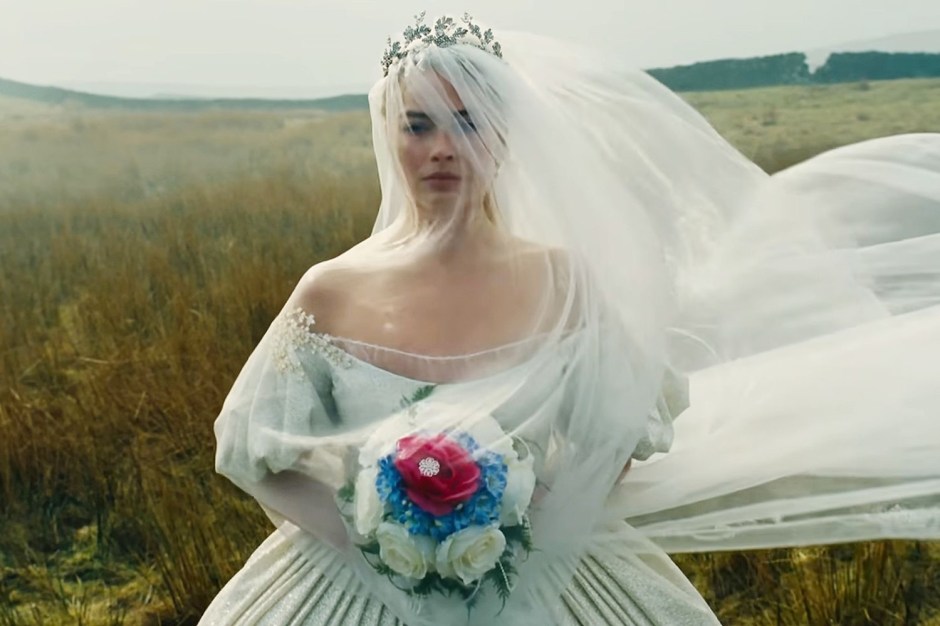
Margot Robbie’s Catherine Earnshaw is rendered impulsive and overtly sexualised, rather than the fiercely divided woman torn between class ambition and metaphysical attachment. Jacob Elordi’s Heathcliff broods handsomely, but without the volcanic stillness and inherited trauma that define him in the novel. Hindley Earnshaw’s absence strips Heathcliff’s vengeance of context; rage becomes aesthetic rather than psychological.
The treatment of Catherine’s motherhood further distorts the novel’s design. In Brontë, her daughter survives; renewal is possible. The film’s decision to have Catherine lose her child pushes the narrative into gratuitous nihilism, dismantling the brutal yet balanced symmetry of destruction and repair.
The sexual explicitness is perhaps the most glaring misreading. In the novel, Catherine and Heathcliff’s love is metaphysical — “I am Heathcliff.” It is identity, not carnality. Their relationship is defined by repression and spiritual fusion. Here, consummation is foregrounded. Erotic tableaux — including a baffling BDSM-tinged encounter involving Joseph — substitute shock for depth. The aesthetic often feels indebted to decadent modern erotica rather than nineteenth-century Gothic intensity. In Brontë, desire is powerful because it is contained. Here it is displayed — and diminished.
Isabella Linton’s portrayal compounds the confusion. In the novel, her suffering is delusion turned horror — romantic fantasy collapsing into brutality. In the film, her torment at Heathcliff’s hands is stylised to the point of ambiguity, unsettling not because it is violent, but because it seems unmoored from moral critique.
Visually, the insistent palette of blacks, whites, and aggressive reds proclaims symbolism rather than allowing it to accumulate organically. The moors in Brontë breathe; they are psychic landscapes. Here they feel curated — aesthetic rather than elemental. Stylisation is not inherently flawed, but when style replaces psychological layering, the result is aesthetic noise.
Only fleetingly — in the childhood confession of love, Catherine smiling as Heathcliff sleeps — does the adaptation approach Brontë’s emotional truth. In that moment, innocence and inevitability coexist. It reminds us of the tragedy’s origin. And of what has been lost.
This is not an interpretation; it is a truncation.
By removing the second generation, altering Catherine’s fate, villainising Nelly, erasing Hindley, and substituting erotic spectacle for metaphysical passion, Emerald Fennell’s adaptation loses more than half the novel’s complexity.
Brontë wrote about obsession, inheritance, cruelty, repression, and the fragile possibility of grace.
This film offers sex without structure, shock without substance — a Gothic symphony reduced to a single, discordant note.
It does not dare too much.
It understands too little.
 Hearts Still Care