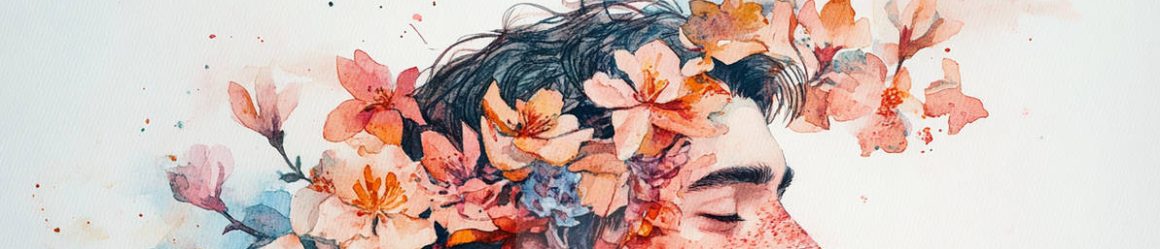

On loving animals in a world that refuses to take that love seriously
There is a particular kind of grief that has no language in public life. It is a grief that is often minimised, politely ignored, or brushed aside with well-meaning but hollow phrases. It is the grief of losing an animal you love not as a possession, not as a companion, but as a child.
My dogs are my children.
I do not say this metaphorically. I say it as a lived truth. I cannot have children of my own, and the love that might have gone into raising a human life has found its home in them — in their care, their safety, their health, their fears, their joys, and their complete dependence on me.
They matter to me more than any human being in my life. This is not a comparison I arrived at casually, and it is not something I say to shock or provoke. It is simply how my heart is structured. They are my heart and soul. When one of them dies, it is not a chapter closing. It is my world crashing.
This is where most people stop understanding.
We live in a world that insists on hierarchies of worth. At the top stands the human being — rational, vocal, educated, entitled. Beneath us, everything else exists to serve, support, or be sacrificed. This belief is so deeply embedded that it is rarely questioned, even when it causes immense suffering. Animals are expected to endure quietly, to disappear quietly, and when they die, for the humans who loved them to “move on” quickly and without fuss.
But animals do not have voices. They do not have free will in the way humans do. They cannot leave bad situations, argue for their rights, seek therapy, or explain their pain. They love unconditionally, without strategy or self-interest. Their dependence is total. And it is precisely this dependence that creates a bond unlike any other.
Human beings can choose whether or not to love us back. Animals do not calculate. They give themselves entirely.
I have attended many funerals in my life. I have lost human family members I loved deeply. In those moments, the compassion I received was immense and generous, and I am grateful for it. Society understands human grief. It knows the rituals, the condolences, the appropriate responses.
But when one of my dogs dies — when my child dies — the response is different. Muted. Awkward. Sometimes absent. There is an unspoken assumption that this loss is somehow smaller, less legitimate, less deserving of space.
I understand that not everyone shares my relationship with animals. I do not expect people to feel what I feel. I do not expect constant presence, elaborate gestures, or performative sympathy.
What I do expect is consideration and understanding.
Friendship, to me, is not just about shared laughter or history. It is about knowing what the other person values, what holds their life together, what breaks them when it is taken away. If someone says they care about me, then they should know that my dogs are not peripheral to my life — they are my life.
When that understanding is missing, I notice. And something shifts.
This is not about punishment or resentment. It is about clarity. Loss has a way of revealing people — not their cruelty, necessarily, but their limits. And once you see those limits, you cannot unsee them. I cannot feel the same depth of connection with someone who dismisses or minimises the deepest grief I am capable of experiencing.
In recent times, we have seen institutions decide the fate of countless animals while framing the issue entirely around human inconvenience and human suffering. The irony is staggering. Humans, for all our flaws, have agency. Animals do not. Yet it is always animals who are expected to pay the price for human failure, fear, and neglect.
For me, love does not operate on a species hierarchy. Grief does not recognise one either.
When my dog dies, I am not losing “just an animal”. I am losing a child I raised, protected, worried over, and loved every single day. I am losing a being who trusted me completely in a world that often does not deserve that trust.
And if that truth makes people uncomfortable, so be it. My grief does not exist to be convenient. My love does not exist to be explained away.
This is not a demand for understanding. It is a statement of who I am — and how I love.
 Hearts Still Care