When the funeral is over, and the house finally empties of people, grief does something cruel and ordinary at the same time. Life resumes. Chores return. The day demands to be lived — and that is when the absence announces itself.
Not in grand ways. In small, brutal details.
The food bowls are the first thing I notice. I used to juggle three every day. Now I carry two, one in each hand, and my body still prepares for the weight of the third. Muscle memory has not yet learnt loss.
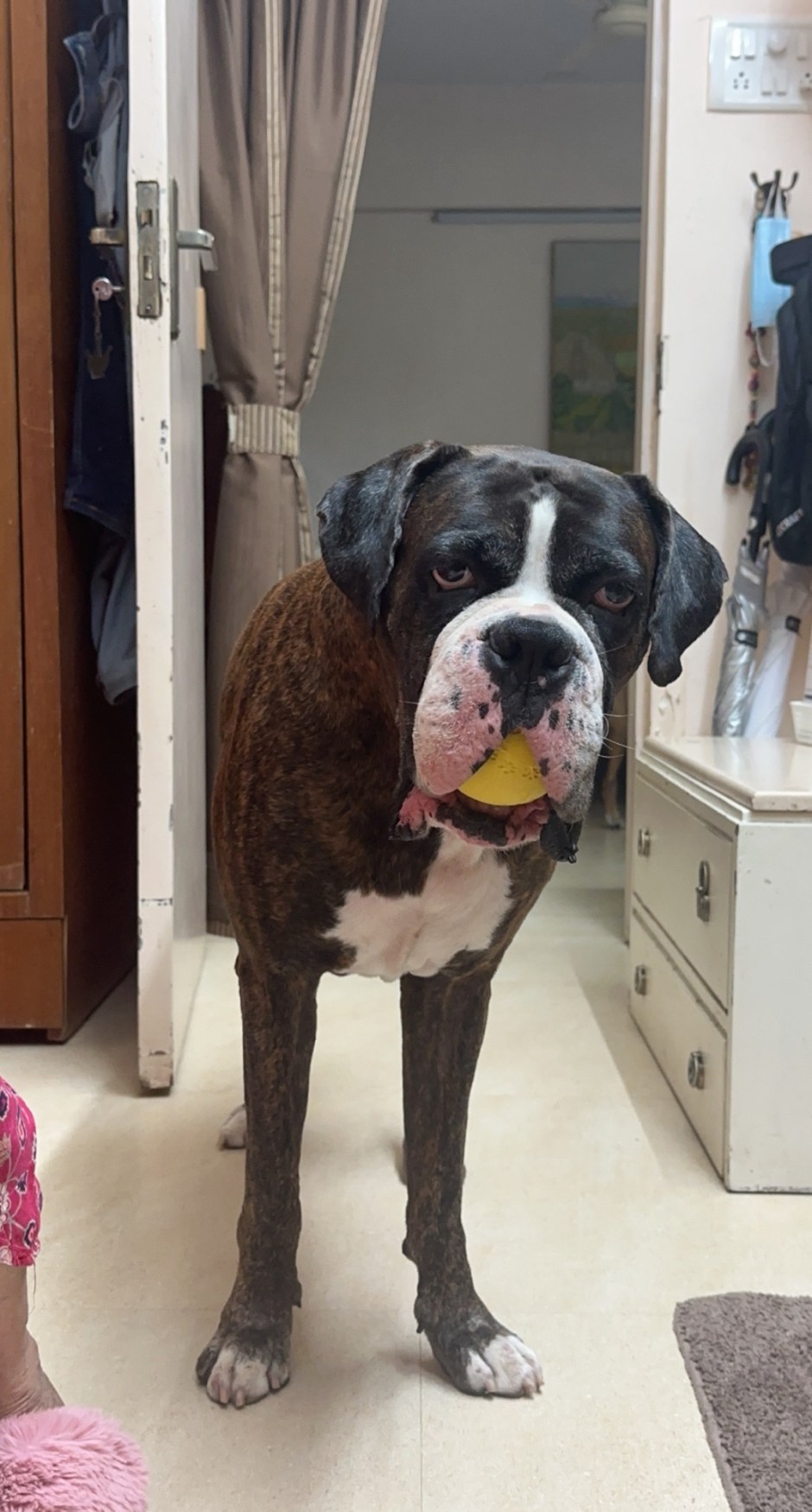
In the corner of the room, his mattress sits unused. The edges are stiff with dried drool — the very drool everyone used to shy away from. Zach was intensely affectionate. He loved with his whole body. And yet, visitors would dodge him, hold their clothes away, laugh nervously.
“Zach, sit down.”
“Zach, go away.”
He never understood why love had conditions.
The medicine chart still hangs on the fridge — morning, afternoon, night — followed meticulously, desperately, faithfully. A quiet record of how hard we tried. His leash hangs with the others, but his remains vacant. I notice the name tag first. Zachary. Still there. Waiting.
Then comes the first midnight walk without him.
We step out as a family, no one leaving anyone alone. The girls walk beside me, steady and present, as if they instinctively know that this is not a walk — it is an endurance test. I see the spot where Zach always stopped to pee. He took his time. He ambled. He was a big boy. He occupied space without apology.
And now that space is painfully, offensively empty.
I don’t have many grand things to say about our relationship, except this: I loved him. Fiercely. Quietly. In the way fathers often do with sons. It wasn’t demonstrative. It wasn’t dramatic. But it was solid.
Nothing like my relationship with my own father — because Zach always looked to me for help, for reassurance, for safety. And I always told him the same thing: I’ve got your back.
I used to sing to him —
You’re my honey bunch, sugar plum, pimply imply umpkin —
and he would come charging towards me, tail wagging wildly, a weapon that bruised shins and toppled objects. Love, again, without restraint.
The house feels hollow now. Zach was a large presence — lumbering, filling up rooms, claiming corners, leaning his weight into life. The gentlest boxer dog. The sweetest. And according to everyone in the family, one of the most handsome dogs they had ever seen.
He knew my aunts.
He lived through Covid with me.
He witnessed deaths.
He stood beside me through grief before becoming its centre.
He was my baby.
My baby boy.
And he has taken a piece of my heart with him.
People often talk about grief as something that arrives suddenly, but this grief has been rehearsed for months. Living with two terminally ill dogs teaches you anticipatory mourning — the long, slow exhaustion of loving while preparing to lose. And yet, when the moment finally comes, it still catches you unprepared.
Condolences arrive. Kind words follow death easily. But the real work of grief happens afterwards — when no one is watching, when the house is quiet, when memory ambushes you in ordinary moments.
These memories will keep jolting me as the days go on. I know this. I have seen enough death to know that time dulls the sharpest edges. Pain becomes a low ache. Survivable. Livable.
But not yet.
Right now, I am grief-stricken.
Right now, I am wracked with pain.
Right now, love has nowhere to go.
And so it lingers — in empty bowls, unused leashes, dried drool, midnight walks, and a father that remembers him even when the world moves on.
 Hearts Still Care
What you wrote captures grief exactly as it lives—not loudly, not ceremoniously, but in the quiet after everyone leaves. The muscle memory. The empty space where presence once insisted on being felt. Elisabeth Kübler-Ross wrote that grief doesn’t move in neat stages, and this reads like that truth in motion—love, disbelief, pain, and meaning all colliding at once.
What stands out most is not just the loss of Zach, but the depth of the bond you describe: responsibility, protection, constancy. That kind of love doesn’t disappear.
LikeLiked by 1 person
Thank you
LikeLike