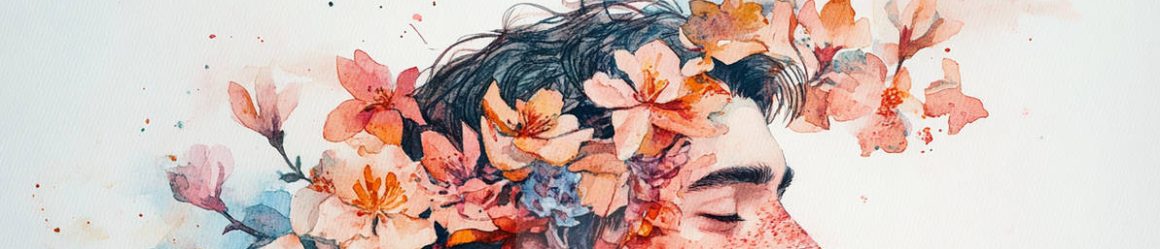

As a child, religion was joy. It was something to be celebrated, something woven into my life through festivals, rituals, and shared experiences. I had Christmas at school, Eid with friends, Diwali with family, Navroz from my mother’s side, and Gurpurab from my father’s. Each festival felt like an invitation to something bigger—a collective celebration of faith, culture, and belonging. Ganpati and Krishna were my favourites, deities I connected with through dance and devotion. Religion, in those days, felt vibrant, inclusive, and full of life.
Then, in 2013, I lost my faith. It had been unraveling for years, but that was the moment I could no longer hold on to it. I had believed in the ideal of God, in the idea that faith encouraged kindness, humility, and service. But as I looked around, I saw how rarely people lived by those principles. The more I questioned, the more I realised that religion—at least in the way it was practised—was not about morality, but control. It was about rules, about dictating who was accepted and who was condemned.
I still love the festivals; I still appreciate the philosophies embedded in different traditions. But I no longer believe in God. Instead, I have come to see atheism as its own paradox—a rejection of faith that, ironically, requires belief in the absence of divinity. In some ways, atheism becomes a religion, too.
One of the things that has always troubled me is how religion, once a search for meaning, has become a rigid structure—a system of laws that offers certainty to those who seek it. Structure is comforting; it provides uniformity, allowing people to live without questioning too deeply. But should faith be imposed? Should we be forced to follow beliefs that we do not hold in our hearts?
In Hinduism, the Bhagavad Gita says:
“Karmanye vadhikaraste, Ma phaleshu kadachana.”
“You have the right to perform your duty, but never to the fruits of your actions.”
This suggests that faith is not about rules, but about action—about doing what is right without attachment to reward or punishment. It is a personal journey, not a rigid doctrine.
Yet, for many, religion has become an obligation. It demands conformity, punishes dissent, and divides people into “believers” and “others.” I have seen it firsthand—in the hostility between Hindus and Muslims, in the weaponisation of faith in politics, in the way people are judged based on their religious identity rather than their character.
Even in my personal life, I have encountered this prejudice. Friends have questioned why I am in love with a Muslim man. Family and friends have warned me against involving myself with a Muslim household, insisting that “they” will never accept me. I am quite certain they are right and that I won’t be accepted. So, hatred is not exclusive to one group—I have seen the same prejudice mirrored in the Muslim world. It is exhausting, this endless cycle of division.
I often think of a scene from Anne of Green Gables. In it, Marilla tells Anne to kneel and pray. But Anne, with all her youthful sincerity, asks:
“Why must I kneel? Why can’t I go into an open field, look at the sky, and feel a prayer instead?”
That, I think, is the crux of what I believe. Faith—if it exists—should be personal. It should be something we define for ourselves, not something imposed upon us.
But the world does not see it that way. We live in a time when faith is rigid, where people demand uniformity, where questioning is met with hostility. And I find myself deeply disturbed by what this means for the future.
Still, the world will survive. It always does. And in the time I have left, I can only hope that humanity finds a way to embrace both reason and faith—not as weapons, but as paths to something greater than hate. But I doubt that will happen…
 Hearts Still Care