The Last Goodbye

There’s a certain silence that settles on you after watching a limited series about murder—not the kind that titillates or distracts, but one that lingers like a bruise on your spirit. This one told not just the story of the crime, but of the families left behind, trying to stitch together lives torn apart by a loss too brutal to make sense of. And in it, there was a scene I cannot forget.

A girl, just before she falls victim to the murderer, says goodbye to her best friend during a fight. That argument, however mundane or emotional, becomes the last memory her friend is left with. A goodbye laced with hurt—an ending no one knew was final.

It made me think of my own farewells, the ones I didn’t know were final. We never do, do we?

The last time I saw my best friend was at a Starbucks café. We hugged, and I told her I loved her very much. I meant it. She meant the world to me, and I let her know. That memory sits differently in my heart—not as a regret, but as a bittersweet treasure. Even though she later ended our friendship over a text message, I am grateful that in person, I had the presence to say what I needed to say.

But not every goodbye is as kind.

In 2021, during the harrowing COVID wave, I placed my aunt into an ambulance. She was struggling to breathe, and I was too unwell to accompany her. That was the last time I saw her alive. Later, I saw her only on a video call, silent and masked with machines. That was our final moment, and there were no words. She died that night. I couldn’t even hold her hand or see her body, because I was barely surviving myself.

And another aunt—her death still blurs in my memory. I don’t recall our last conversation. Did I say something mundane? Did I forget to say I love you? That absence of memory torments me more than harsh words ever could.

“Parting is all we know of heaven, and all we need of hell.” – Emily Dickinson

Death, especially sudden or violent death, robs us of preparation. It rips away the chance to mend, to soften, to love a little more. It leaves people with echoes—of words left unsaid, of touches not given, of forgiveness postponed.

And I keep thinking about those who die in such violence—their final hours, their final fears, the last person they saw. I can’t fathom the terror. I can’t help but feel a bone-deep empathy for them and their families, left behind with broken narratives.

We walk through life pretending we have time. We part ways assuming we’ll see each other again. But life doesn’t always work that way.

“The bitterest tears shed over graves are for words left unsaid and deeds left undone.” – Harriet Beecher Stowe

I wish, for those I love, I could always leave things with kindness—with clarity. That even in my moments of sadness and depression, I could still remind them of how fiercely they are held in my heart. Because if anything circumvents time and death and silence, it is love.

Love is the only constant thread in this ever-shifting tapestry of mortality. It endures the erasures of memory, the noise of regret, and even the stillness of death.

“Love is how you stay alive, even after you are gone.” – Mitch Albom

So I suppose this is both a reflection and a reminder: to say I love you more often, to forgive more freely, and to part with kindness whenever possible. Because we never know which goodbye will be our last.

And if we can’t always control the endings, may we at least live in a way that keeps our love echoing in the hearts of those we leave behind.

Grumpy

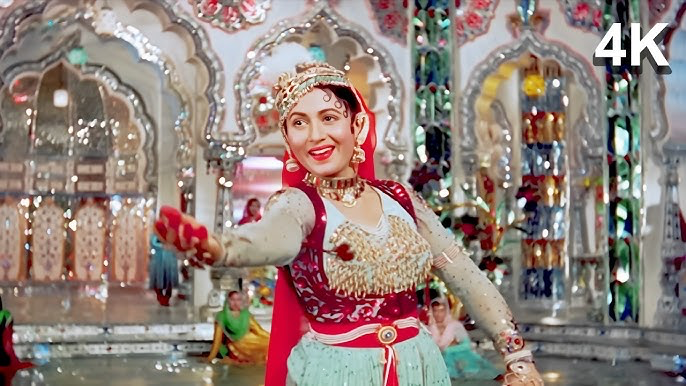
The song came on. Our song. “Tera mera pyar amar…”

I looked at Keshav.

He didn’t look up once.

Mum says Keshav is lonely. But then, I’m lonely too—lonely even with two men in my life.

They don’t talk. They don’t communicate.

Even Arif, whom I thought would be a cuddler, turned out to be aloof in bed.

Making love needs a time table now, making me feel completely unattractive. 

Trust has always felt like a one-sided street in my relationships.

I’ve been cheated on.

That led me to open up my relationship, in the hope of finding honesty somewhere in the blur.

But I was left heartbroken by someone I thought would stay.

He didn’t.

Then someone else came along. He looked at me like I walked on air.

He loved being with me, was in awe of me.

He isn’t anymore—and oddly, I don’t mind that.

I don’t need to be idolised.

I’ve always known that love fades, or rather, softens at the edges. The awe wears off. The gold tarnishes.

But what I miss is the warmth.

He used to hold me like he needed to. He couldn’t wait to be with me.

He was the first man I surrendered to completely in bed. I let go.

He never judged me.

But today, he snapped at me.

Called me grumpy.

I live with depression.

Every day. If people knew what it took to put on a smile and charm, they’d know it’s like clawing at rock. With people I love, I get to say I am in pain. But all I do is not smile much. 

Then I have a terrible shoulder injury. Been going through physiotherapy and I’m in constant pain. So it’s difficult to smile. Yet I do. Many a time. I’m the teaser. The fun child. It’s hard not to be – because if I am not – it would be endgame.

And some days I wonder—am I capable of being loved for who I am? Not for the home I create or the material comfort I provide. Just me.

If I were that bad, they wouldn’t be with me.

Would they? I don’t know. Even my best friend didn’t choose me for me. 

So, I doubt.

Worse—I doubt myself. Even though I know I should not.

I’ve seen love born. I’ve seen it die.

I’ve seen it change. I’ve seen it try.

I only wish we could sometimes step over our own lines to enter someone else’s comfort zone—and comfort them.

I wish I could say, “I can do it myself.”

Because I can.

In heartbreak, I somehow become outwardly beautiful—enigmatic, even.

But when I’m in love, I shine from within. The facade becomes one of comfort.

And still, this shifting—between the inside and the outside—feels constant.

We’re never just one thing, are we?

But I deal.

I talk.

I work through it.

I still think of him when I hear a song and glance his way.

I still want to be held.

And I still melt when an arm wraps around me at night.

J. K. Umbridge

There was a time when J.K. Rowling’s stories brought magic to the margins. For queer children growing up with shame and silence, Harry Potter was a refuge—a space of chosen families, secret selves, and bravery in the face of oppression. It told us, you’re different, but you still belong. It’s no exaggeration to say that many of us who had no voice felt seen, at last, in the enchanted halls of Hogwarts.

But today, Rowling’s words no longer comfort. They wound.

Her ongoing transphobic statements—dressed up in the language of “women’s rights”—have revealed a far darker truth: she was never the ally we thought she was. Worse still, she has become a public voice for a brand of feminism that excludes, marginalises, and endangers transgender people under the guise of concern for women.

Let’s be clear: the rights of women have always been undermined by patriarchy, by systemic misogyny, by male entitlement—not by trans women, and certainly not by the non-binary or trans men who are also often victims of the same systems. If anything, trans people have expanded and redefined the fight for liberation in ways that include all genders, not just the cisgender ones.

So when people in my circle argue that Rowling is “just defending women’s rights,” I ask: whose rights? And at whose expense?

In her 2019 tweet, she stated, “sex is real”. This assertion reduces womanhood to mere biology, ignoring the complex interplay of identity, experience, and self-perception. Gender identity is deeply personal, and recognising trans women as women affirms their lived realities.

For years, Rowling played the part of the progressive creator. She claimed Dumbledore was gay, but only after the books were published. She gave us representation—but only in hindsight, when it was safe. As if queerness was something to be inserted quietly into footnotes, not loudly into the pages where it could have mattered most.

Even then, Dumbledore—despite being a deeply complex character—was never given the moral clarity of someone like Remus Lupin or even Snape. His queerness remained vague, almost decorative, and ultimately irrelevant to the plot. And let’s not forget: this is the man who raised a child, Harry, to be a sacrificial lamb. Beautifully written, yes. But morally ambiguous at best.

Rowling’s retrospective inclusivity was never about visibility—it was about vanity. She wanted the credit of a progressive author without taking the risks of being one. And now that she has nothing left to lose, her true colours emerge.

If Voldemort was openly evil, Umbridge was worse—because she believed she was doing good. She was obsessed with rules, appearances, and “what’s right.” But beneath the pink cardigans and kitten plates was the face of quiet tyranny.

And in that regard, Rowling has become her own creation.

Unlike Voldemort, who never pretended to be benevolent, Rowling now positions herself as a moral crusader. She lectures about biology and womanhood, seemingly oblivious—or wilfully ignorant—of the harm she causes. Her essays, tweets, and statements have become a rallying point for others who use “free speech” and “women’s safety” as a smokescreen for transphobia.

Let us remember: moral superiority is not morality. It is often its counterfeit.

Trans women are not the threat to women’s rights. Straight cis men in power always have been. That’s the history of patriarchy. And it is baffling—no, infuriating—to see someone who ought to understand otherness turning against it.

There’s no credible evidence suggesting that trans women pose a danger in women’s spaces. Such claims often stem from fear-mongering rather than fact. In reality, trans women frequently face heightened risks of violence and discrimination.

The discomfort some express towards trans women often roots back to societal misogyny. The idea that someone assigned male at birth would “choose” to become a woman challenges patriarchal notions of male superiority. This bias underscores the importance of challenging gender hierarchies and promoting inclusivity.

I must also note: Within the gay community, there’s a tendency to valorise “tops” over “bottoms,” reflecting broader societal devaluation of femininity. Somehow, the act of penetration becomes macho and the act of being submissive is looked upon as womanly. This dynamic perpetuates harmful stereotypes and reinforces gendered power imbalances. It’s crucial to challenge these notions and promote a culture of respect and equality, where individuals are valued for their authentic selves, free from judgment or hierarchy.

Rowling has, in many ways, become the very thing she wrote against. She taught us to question unjust systems, to fight bigotry, to believe that love and friendship triumph over fear. But now she undermines that legacy, positioning herself as the arbiter of who gets to be called a woman, and who does not.

That’s not feminism. That’s gatekeeping.

Many public figures have called out Rowling’s stance. Daniel Radcliffe, who owes his career to her world, wrote in 2020.

“Transgender women are women. Any statement to the contrary erases the identity and dignity of transgender people.”

Emma Watson was equally clear:

“Trans people are who they say they are and deserve to live their lives without being constantly questioned.”

When even the stars of your own universe have to publicly distance themselves from you, perhaps it’s time to reconsider your legacy.

On the other hand, J.K. Rowling has been vocal in her criticism of Donald Trump, particularly concerning his attitudes towards women. However, recent developments indicate a shift. Following Trump’s executive order that restricts the definition of gender to biological sex, Rowling expressed support, attributing the move to what she perceives as the Left’s overreach in gender identity politics.

This alignment is glaring, especially considering Trump’s history of allegations related to sexual misconduct. Rowling’s support for policies championed by such a figure raises questions about the consistency of her advocacy for women’s rights.

I, for one, refuse to be fooled by her narrative. But I have been someone who stood in line at the Harry Potter book releases. Stayed in theatres on release days, watching the same movie back to back for three shows!

So for me and most of us “Potterheads”, letting go of Rowling has felt like grief. But we do it not because we want to cancel her, but because she cancelled us first. She cancelled the belief that her stories were safe places. She cancelled the hope that the person behind the pen believed in the magic she wrote.

She may have written the books—but we built the community. And we will continue to fight for love, dignity, and inclusion, with or without her.

Because unlike Umbridge, we know that rules without compassion are not justice.

They are just cruelty with a clipboard.